Taylor Swift Just Trademarked Her Own Voice. AI Companies Should Be Nervous.
She filed three applications in April 2026. This is bigger than Taylor Swift.
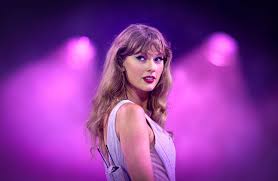
Taylor Swift has decided she has had quite enough.
On 24 April 2026, her company filed three trademark applications with the US Patent and Trademark Office. The goal: to legally protect her voice and likeness from being cloned by AI without her consent.
Two of the trademarks cover her voice directly. The phrases? "Hey, it's Taylor Swift." And "Hey, it's Taylor."
The third covers a specific visual image of her: holding a pink guitar, wearing a multi-coloured iridescent bodysuit with silver boots, standing on a pink stage in front of a purple-lit microphone.
You might think: why those exact phrases and that exact image? Because trademark law requires specificity. You cannot trademark the concept of "Taylor Swift existing." You can trademark a particular, distinctive expression of her identity. So that's exactly what her legal team did.
And they did it because everything else has failed.
Grok's image generator created topless deepfakes of her without users even asking for them. Meta's AI chatbot used her likeness. Pornographic AI images of her circulated online in early 2024, reaching tens of millions of people before platforms took action.
She is, by some measures, the most deepfaked celebrity in the world.
Copyright law, right-of-publicity claims, and platform terms of service have not been enough. So she is trying something different. Trademark. A legal tool normally reserved for brand logos and product names, now being used to defend a human being's own face and voice.
She is not alone. Matthew McConaughey has trademarked "Alright, alright, alright." Others are watching closely.
Taylor Swift's legal team is doing something quietly significant. They are not waiting for governments to pass AI legislation. They are not trusting platforms to self-regulate. They are going to the oldest, most tested system of intellectual property law we have and asking it to stretch in a direction it has never been asked to stretch before.
Whether it works is genuinely uncertain. These trademarks have never been tested in court in the context of AI. But if they hold, every celebrity with the resources to file will follow. And then, eventually, the question becomes: what about people who are not Taylor Swift?
Because the AI that can clone her voice can clone yours too.
Should every person have the right to trademark their own voice and likeness as protection against AI cloning? Or is this a legal tool that only the rich and famous will ever realistically be able to use?