Weird Al Turned Down an AI Payday. On Principle.
One week before the shoot, Weird Al found out who the advert was really for. He walked.
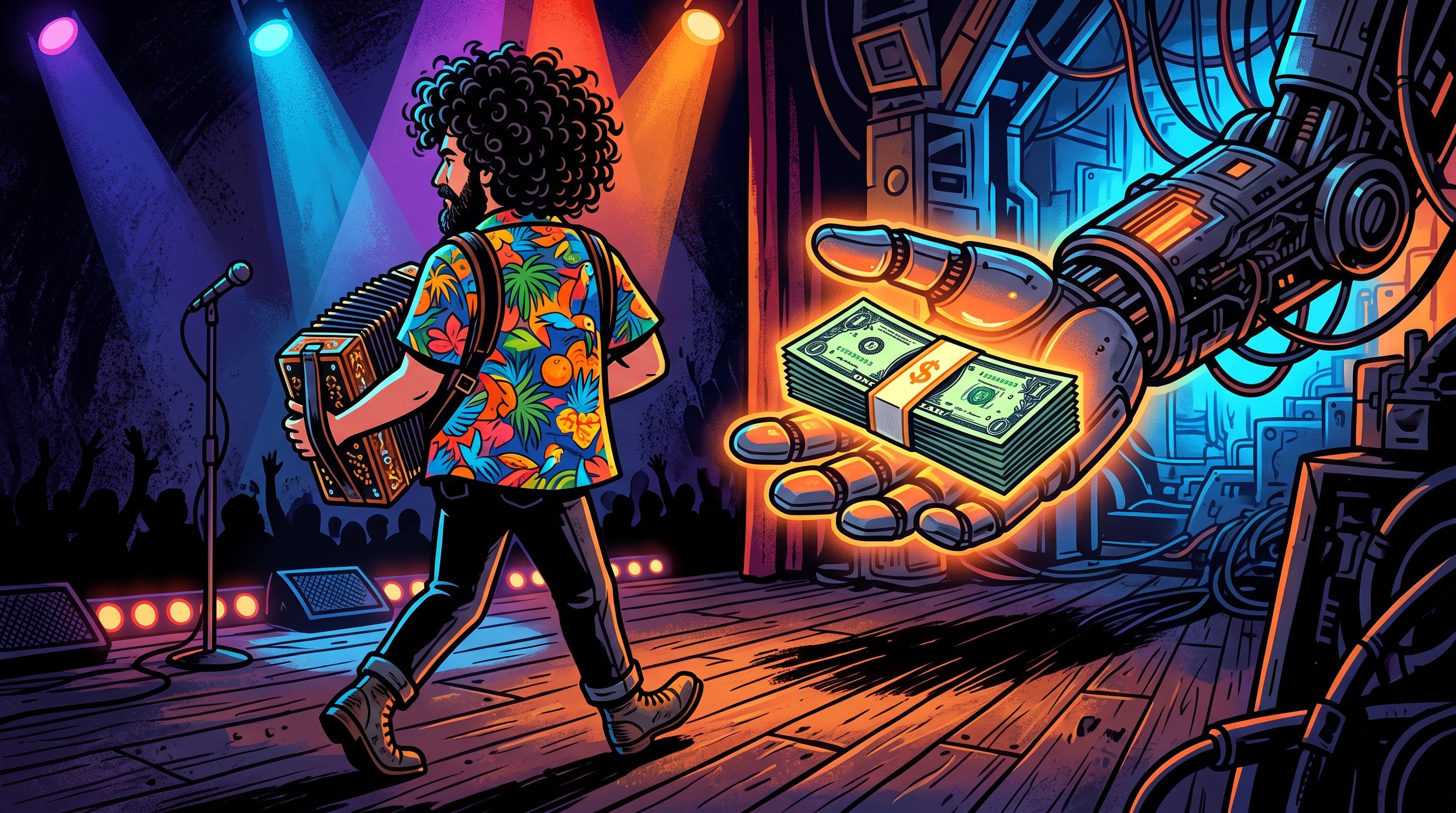
Weird Al Yankovic just walked away from what he calls a nice pile of money. The reason? He refused to become the poster boy for AI.
The parody king told Syracuse.com this week that he was offered a lucrative commercial before his current tour kicked off. The pitch sounded harmless enough. It was for business software, the kind that promises to boost productivity. He said yes.
Then, one week before the cameras were due to roll, he found out what the product actually was. It was AI. And that changed everything.
"I thought, oh no, I can't be the poster boy for AI, forget it," he said. He pulled out on the spot, admitting he felt bad about the timing but not about the decision. "I'm not down with that," he added. He has declined to name the company involved, which is rather classy, and also rather telling.
There is a delicious irony here. Weird Al built a forty year career on parody, and parody is precisely what AI generators now churn out by the truckload. Ask any music platform. Fake Weird Al style songs are everywhere, and the real one is not amused. He has made clear he is no fan of AI generated parody tracks either. The man who spoofed everyone does not fancy being spoofed by a machine.
Why does this matter? Because celebrity endorsement is oxygen for AI companies. A friendly, trusted face makes an unsettling technology feel safe. That is exactly why the offers keep coming, and exactly why a public refusal stings. When the nicest man in music says no thanks, people notice.
The timing is no accident either. Hollywood is split down the middle on AI. SAG-AFTRA gathered 16,000 signatures on an open letter backing the NO FAKES Act, with union president Sean Astin warning that unchecked AI can ruin lives. Scarlett Johansson and Joseph Gordon-Levitt have been vocal critics. Meanwhile Reese Witherspoon and Sandra Bullock are telling everyone to lean in. Every famous face is being asked to pick a side.
What happens next? Expect more of these quiet refusals to become loud ones. Celebrities are learning that the small print matters, and that "business software" can mean rather a lot of things. Expect agents to start demanding full disclosure of what is actually being advertised before their clients sign anything. And expect AI firms to keep chasing famous faces with ever bigger piles of money, because they know a borrowed reputation is cheaper than an earned one.
Here is my take. Weird Al can afford his principles, and plenty of working artists cannot. But that is precisely what makes this useful. The people with the least to lose from saying no are the ones who should be saying it loudest. He did. Your move, Hollywood.